Monday, February 6, 2012

Front Page News Article


Emperor goes against Mongols!
By Fan She ren
Yuan Weekly
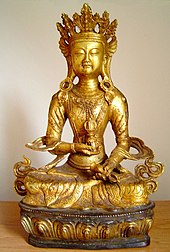
File:YuanEmperorAlbumAyurbarvadaBuyantuPortrait.jpg

DADU- Buyantu Khan, Emperor of China is going against the Mongols by encouraging Chinese culture. Because of his Confucian ways, he’s siding with the Chinese citizens and doing things to help them. The Khan has just made another important decision for them yesterday in 1313.

Growing up, the emperor was taught by a Confucian scholar, Li meng, which started his deep interest in Chinese culture. He knew a lot of Chinese history and took a liking to Chinese calligraphy and paintings. But even when he was head administration, he still liked the Chinese enough to have them around him. An old friend of his in the administrative, Bataar Khenbish, tells us what he was like when he was in those days. “He always seemed to be with more Chinese than his own people. I see that he still prefers them today. I don’t like the idea of him encouraging their culture, but I’m not going to do anything to stop him. It’s his choice and his choice alone. I just hope that nothing bad will happen to him because of this.”

Recently, he had just reestablished the civil servant exams, that are tests you take to pass so you can be in the government based on your knowledge and skill. But now it’s based entirely on Confucianism! Many of the Mongols frowned upon him as this was the biggest help to the Chinese citizens so far. Nakhu Kiyat, a Mongolian official, explains how something like this should never happen again. “I cannot believe the emperor! Helping out these Chinese whelps! The point of taking over this country was so that we could get rid of the Chinese, not put them back in the government! They'll cause conspiracies and protests if any Chinese happen to ace the test, which is more than likely because they practically worship this ‘Confucius.’ I cannot allow the emperor to make another foolish mistake like this, or it will surely end in turmoil. If it wasn’t for that Confucian scholar that taught him when he was young, none of this would be happening!”

However, this is not the first time the emperor has wanted to help the Chinese. He’s also restored the old Chinese currency as the only official one, and abolished the Office of Market Taxes, which greatly helped the Chinese merchants. A Chinese farmer, Bao Huang-fu, tells us how generous and kind it was of the emperor do this for the Chinese citizens. “All throughout this dynasty, the emperors have payed no attention to us, leaving us alone to die while the Mongolian filth get all the riches of our land. I was so grateful, though, when I heard that he was starting the civil service exams again. This is great news for me and my family. If I could get in, I wouldn’t have to work so hard to barely support my family! And with it being based on Confucianism, he’s made it so the Chinese will have the upper hand! I hope that he continues on with these blessings, so that someday, maybe we can be treated better than the fourth class citizens that everyone treats us like slaves.”

Friday, February 3, 2012

Editoral

Power Struggle Ends in Chaos
Recently, the Mongolian capital city of Karakorum was destroyed. Not by rebellious Chinese, but by two officals, Ariq Böke and Kublai Khan, the Great Khan of Mongolia. There is warfare between the two brothers for title of the Great Khan. This is ridiculous! If Kublai Khan did not disagree with his brother becoming Khan, our grand capital would still be intact!
Most foreigners do not reject when someone steps into power because they are born into power. But because of Kublai’s selfishness, warfare has broken out between him and his brother. His brother Ariq Böke, had his own kurultai (a meeting to elect the Khan) and was elected Great Khan, therefore he was the rightful Khan. Also, only two people rejected him, which were Kublai Khans acquaintances. But when Kublai heard of this and wanted the title for himself, he went and had his own kurultai for himself and was pronounced Great Khan, leading to warfare between the two brothers, causing our beautiful capital of Karakorum to be destroyed.
Although is there is good reason for Kublai Khan to be the Great Khan instead of his brother. He is older and as a rule, should have the birth right. He also has more support in China as well, which will also lead to less rebel when the Mongols conquer more land. But, Ariq had more Mongolian support, which counts more towards the vote. When Kublai went to make himself Khan, it was quite the opposite from his brother, having little to no support at all, but still being pronounced Khan.
Kublai Khan should give up his title and give it to Ariq, who deserves it more than Kublai does. He should admit that he rightfully took it away from his brother and give it to him as his apology. This will stop the warfare between the two, which will lead to less destruction. If he continues to be thick headed with himself, he shall risk the rest of Mongolia becoming a barren wasteland due to the warfare.

Map Paragraph


Even though the Yuan Dynasty only lasted from 1271–1368, less than 100 years, it conquered more land than the Southern Song Dynasty did with over 100 years. While the Southern Song Dynasty was able to conquer most of southeastern China, the Yuan was able to conquer most present day China, Mongolia, and North Korea. The Yuan had many physical features, such as the Gobi Desert, Plateau of Tibet, Taklamakan Mountains, the North China Plain, and the Yellow and Yangtze River. Since the Mongols ruled this Dynasty, Mongolia was obviously part of their territory. The capital city Peking (or Dadu) was where the emperor lived during his rule. All roads during this dynasty lead to Dadu, so it was easy to find your way to the capital city. Although the Southern Song Dynasty may have lasted longer than the Yuan, the Yuan has not only conquered more land than the previous dynasty, but also established more relationships with foreigners than most other dynasties ever had.

Interview with Kublai Khan

Q: How did you come to power?
A: It wasn’t easy, I’ll tell you that. After my brother died, I heard my brother Ariq Böke was stepping into power. I couldn’t allow this to happen. Even though he is my brother, he was not ready to handle the burden of becoming emperor. He had not established any ties with the Chinese whatsoever. This would lead to great war with the Chinese, something we’ve tried very hard to prevent. So I went back to Mongolia and decided to become emperor for myself. I had just enough support to be pronounced Great Khan. I’m still battling with my brother for the throne, but as long as I am Khan, I will make sure that I will keep this country stable, something I’m not sure he could handle.

Q: Do you feel like you should live should live up to your brother’s standards to honor him?
A: In a way, I do. I wouldn’t be in power right now if he was still here. I remember when I heard message that he had died, I was heartbroken. I was on my way to go help him, but when the idea settled in my mind, I realized that I would never be able to. I was very close to him. But he shall not be forgotten. He died in battle, so I plan to make sure that there will be no war with the Chinese. His name, Möngke, means “eternal”, so I plan to make sure that his legacy continues.

Q: How does it feel to be the first alien emperor of China?
A: It feels like a great accomplishment that the once powerful nation that tried so hard to keep the Mongols out is now under its rule. I thought it was just great that we got past the Long Wall! But aside from achieving these huge goals, it also has its minor setbacks. Since I’m from Mongolia, I don’t really know what Chinese life is like. Although this country is now under Mongolian rule, I’m not sure how I can change this country too much without major protests about how their lifestyle will change. Also, I’m not sure if the Chinese will except me as their ruler right now because they may not trust me. But otherwise, I feel that this is a great achievement for the Mongolian Empire.

Q: How do you plan to rule the country without anyone telling you how to govern it?
A: Well I plan to put my own people at the top, of course! They should come first in this new land of prosperity. Then I’ll put the foreigners next in line because I cannot trust the Chinese right now, mainly because I’m afraid they will plan a revolt against me, so they’ll be at the bottom. But overall, I don’t plan to change too much in this new land. I’ll let the Chinese worship whomever they choose, seeing that it’s the least I could do for them after taking over their homeland. The only main difference between our two peoples’ rights is that the Chinese will be more strict, seeing as I cannot trust them, as I said before. I believe this dynasty will be one of the most memorable. I hope its legacy will last longer than I.

Belief/ Religion Systems


During the Yuan Dynasty, many religions were practiced and many beliefs were accepted. While some people believed in Shamanism, others believed in Taoism. Others worshipped the Buddha in Buddhism, while others believed in Lamaism. Some differ greatly, while others are quite similar. But one thing is for certain: there were many diverse religions in this era.
Belief: Shamanism
Shamanism is the belief that shamans, or holy men, had the gift of talking to the dead or the gods. Much like psychics and priests, shamans were able to go into a trance and speak to those who are deceased. They could also perform special rituals that could rid people of evil spirits that could make you healthy when you’re sick, get rid of bad luck, and other things that would come in handy. Although, each ritual is different to each tribe. Shamans also have the power to tell the future by reading bones or scrying. Also in Shamanism, some shamans don’t just function as healers. Some lead the dead to the under world, but their main role is a healer. Although Shamanism is mainly a belief in spirits, shamans play a role in many people’s lives to let others know that the dead are not gone, just in another world.
Belief: Taoism

Yin and Yang 
  Taoism is the belief that one should follow the Dao, or the way. This belief wants one to become harmonious and natural. Taoism also believes that there cannot be harmony with suffering. A symbol that represents Taoism is the Yin Yang. Also in Taoism, there is a book called the Daodejing that is written by Laozi, the founder of Taoism, that is filled with quotes on how to become one with the Dao. “Those who know don’t talk. Those who talk don’t know,” is a quote that sums up how you cannot have good without bad. Another way to become one with the Dao is to follow wu wei. Wu wei means “action without action.” The goal of wu wei is to realize how to do action with action, thus discontinuing the never ending paradox and becoming one with the Tao.
Religion: Buddhism
Buddhism is a religion that based on the teachings of the Buddha. The main goal in this religion is to reach nirvana, or enlightenment, so you can end the cycle of reincarnation, or rebirth. Some things that decide whether or not you break the cycle is karma. Karma is everything that you say and do. If you do many good things, you will be reborn as a human, or maybe even reach nirvana. If you do many bad things, you will be reborn as something like a spider or an fly. One way to prevent this bad karma is to follow the Four Noble Truths. The Four Noble truths state that:
  1. Life leads to suffering
  2. Suffering is caused by desire
  3. Desire ends when you reach enlightenment
  4. You achieve enlightenment by following the Buddha’s ways

You also follow the Eight Fold path, which states how to end suffering and desire. But there are some people who do not want to reach nirvana, but want to helps others reach it. These people are called Buddhisatvas. But if they can help someone reach nirvana, it’s like reaching nirvana for themselves.
Religion: Lamaism

Lamaism is the Tibetan form of Buddhism. It has the same concepts of Buddhism, but you try to reach Buddhahood. Buddhahood is a state that is free of distractions to liberate one. They also have Buddhisatvas to help others achieve this enlightenment. It is also highly prized to have a teacher or guru, like in most Buddhist cultures. But unlike normal Buddhism, there is a way to obtain enlightenment very quickly, but it’s very dangerous. In this method, you must receive permission from a Lama (Tibetan teacher of dharma) that has permission to give it. They also try to use self- censorship, or try to keep work hidden. Although Lamaism is closely related to Buddhism, this religion has its own way of reaching its own nirvana.

Bibliography


Works Cited
“Buddhism.” Wikipedia. N.p., n.d. Web. 1 Feb. 2012. <http://en.wikipedia.org/‌wiki/‌Buddhism>.
"File:YuanEmperorAlbumAyurbarvadaBuyantuPortrait.jpg." Wikipedia. N.p., n.d. Web. 6 Feb. 2012.
 <http://en.wikipedia.org/wiki/
“File:Liu-Kuan-Tao-Jagd.JPG.” Wikipedia. N.p., n.d. Web. 6 Feb. 2012. <http://en.wikipedia.org/‌wiki/‌File:Liu-Kuan-Tao-Jagd.JPG>.
“Lamaism.” Wikipedia. N.p., n.d. Web. 1 Feb. 2012. <http://en.wikipedia.org/‌wiki/‌Lamaism>.
“Mongolian Interlude.” Imperial Era: III. N.p., n.d. Web. 1 Feb. 2012. <http://www-chaos.umd.edu/‌history/‌imperial3.html#yuan >.
“Shamanism.” Mr. Donn. N.p., n.d. Web. 1 Feb. 2012. <http://mongols.mrdonn.org/‌religion.html>.
“Shamanism.” Wikipedia. N.p., n.d. Web. 1 Feb. 2012. <http://en.wikipedia.org/‌wiki/‌Shamanism#Etymology>.
“Southern Song Dynasty Map.” http://www.chinahighlights.com/map/ancient-china-map/southern-song-dynasty-map.htm. N.p., n.d. Web. 29 Jan. 2012. <http://www.chinahighlights.com/‌map/‌ancient-china-map/‌southern-song-dynasty-map.htm>.
“Taoism.” Wikipedia. N.p., n.d. Web. 1 Feb. 2012. <http://en.wikipedia.org/‌wiki/‌Taoism>.
“Travel China Guide.” Travel China Guide. N.p., n.d. Web. 1 Feb. 2012. <http://www.travelchinaguide.com/‌intro/‌history/‌yuan/>.
“What was the Mongols’ Influence on China?” Mongols in Wold History. N.p., n.d. Web. 1 Feb. 2012. <http://afe.easia.columbia.edu/‌mongols/‌china/‌china.htm>.
“The World of Kublai Khan: Daily Life.” The Metropolitan Museum of Art. N.p., n.d. Web. 1 Feb. 2012. <http://www.metmuseum.org/‌en/‌exhibitions/‌listings/‌2010/‌khubilai-khan/‌daily-life>.
“Yin and Yang.” Basic Chinese Horoscope. N.p., n.d. Web. 6 Feb. 2012. <http://chinesehoroscop-e.com/‌astrology/‌yin-and-yang.php>.
“Yuan Dynasty.” Art Virtue. N.p., n.d. Web. 1 Feb. 2012. <http://www.art-virtue.com/‌painting/‌history/‌yuan/‌yuan.htm>.
“Yuan Dynasty.” Princeton Asian Art Collection. N.p., n.d. Web. 1 Feb. 2012. <http://etcweb.princeton.edu/‌asianart/‌timeperiod_china.jsp?ctry=China&pd=Yuan>.
“Yuan Dynasty.” Wikipedia. N.p., n.d. Web. 1 Feb. 2012. <http://en.wikipedia.org/‌wiki/‌Yuan_Dynasty>.
“Yuan Dynasty Map.” http://www.chinahighlights.com/map/ancient-china-map/yuan-dynasty-map.htm. N.p., n.d. Web. 29 Jan. 2012. <http://www.chinahighlights.com/‌map/‌ancient-china-map/‌yuan-dynasty-map.htm>.
“Yuan Dynasty of China.” Culture-4-Travel. N.p., n.d. Web. 1 Feb. 2012. <http://www.culture-4-travel.com/‌yuan-dynasty.html>.